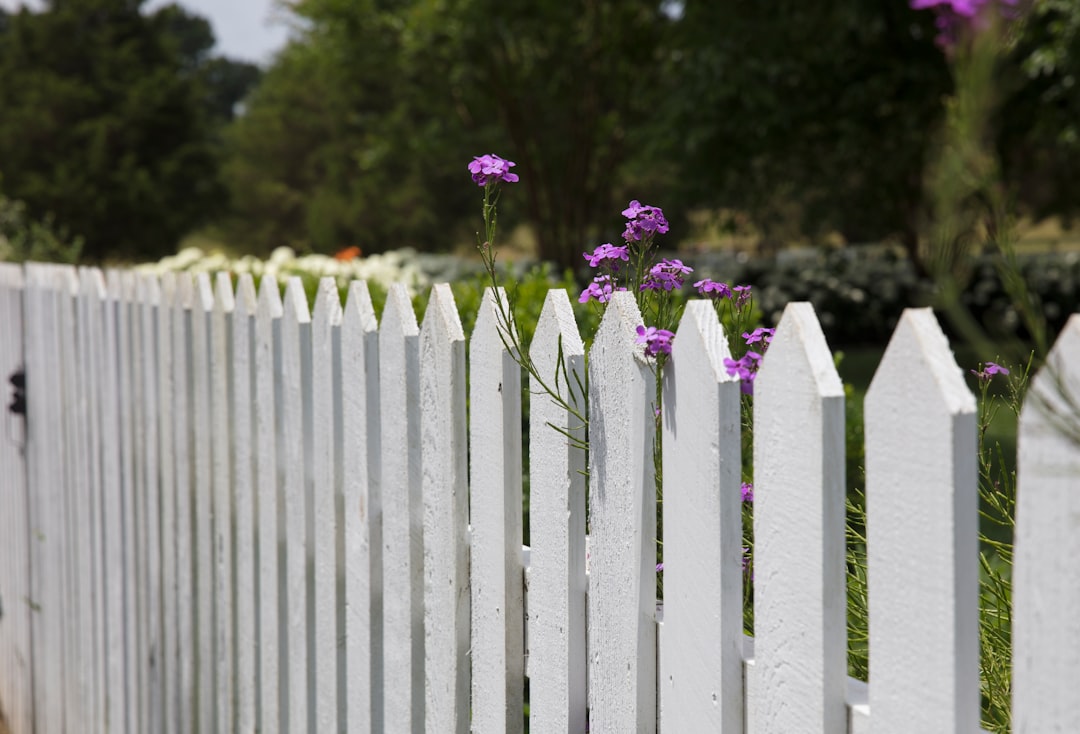
Fencing in South Africa serves multiple purposes simultaneously — security, boundary demarcation, privacy, and aesthetics. Unlike many other home improvement decisions, fencing is highly visible, directly affects your property value and insurance profile, and often involves your neighbours and local municipality. Getting it right requires choosing the correct fencing type for your specific needs, finding a contractor who installs it properly, and understanding what local bylaws require.
Fencing types and what they are best suited to
Palisade fencing is the most common security fencing choice for South African residential and commercial properties. Steel palisades (the vertical upright bars, typically with pointed or spiked tops) are welded to horizontal rails and set in concrete footings. It provides a clear visual deterrent, allows visibility through the fence (which can support CCTV and armed response monitoring), and is durable. Available in flat bar, round bar, square bar, and diamond profiles. Hot-dip galvanised palisade with a powder-coat finish offers the best corrosion resistance and longevity. Palisade is appropriate for front boundaries, driveway entrances, and perimeter security where deterrence is the primary goal.
Clearvu and similar anti-climb mesh is a welded wire mesh panel system designed to prevent climbing — the small apertures between wires cannot accommodate hand or footholds. It is widely used in commercial security applications and has grown in residential use because it offers high security with better aesthetics than palisade in some settings. More expensive than standard palisade but provides a cleaner appearance, particularly when installed with a green or black powder coat that blends into garden settings.
Pre-cast concrete walling (typically referred to as precast walling) provides full privacy, acts as a sound barrier, and is the most robust physical perimeter option. Interlocking precast concrete panels set between steel or concrete posts. Widely used for back and side boundaries in suburban properties. Not appropriate for front boundaries in most municipal jurisdictions (bylaws typically restrict solid wall heights at street frontage). Highly resistant to forced entry and does not require painting or significant maintenance. The posts and panels can shift over time if footings are inadequate — a common failure mode with cheaper installations.
Timber fencing is used for garden partitions, pool enclosures, and rear boundary privacy screens where security is secondary to aesthetics. Pine lap fencing, timber palisade, and slat fencing are all options. Timber requires regular maintenance (sealing or painting every two to three years) to prevent rot and splitting in South African conditions. Life expectancy with proper maintenance is fifteen to twenty years; without it, deterioration begins within three to five years.
Electric fencing is commonly added to the top of palisade or precast walls as an energised deterrent. It must be installed by a registered electric fence installer under the Occupational Health and Safety Act — this is a legal requirement, not optional. Electric fencing requires a Certificate of Compliance (COC) upon installation and when the property is sold. An electric fence without a COC is an illegal installation that creates liability for the property owner.
Pool fencing is governed by specific regulations in South Africa. The SANS 10134 standard specifies the requirements for pool barriers — minimum height, gate specifications, gap dimensions, and climbability criteria. Pool enclosures must comply with this standard and in many municipalities require approval. Non-compliant pool fencing exposes the property owner to significant liability in the event of an accident.
Municipal bylaws — what you need to know
Before choosing a fencing type or height, check your local municipality's fencing bylaws. These vary between municipalities but typically regulate:
- Maximum wall or fence height at street boundary (commonly 1.8m for solid walls, 2.1m for transparent fencing)
- Whether solid walls are permitted at street frontage at all (many residential zones restrict solid front walls)
- Requirements for gate setback from the street to allow vehicle stacking
- Electric fence regulations and signage requirements
A contractor who does not raise municipal compliance in the planning conversation is a risk. You — the property owner — are responsible for compliance, not the contractor, and an illegal installation may have to be demolished.
Boundary disputes and surveyor pegs
Before installing boundary fencing, confirm where your boundary actually is. Surveyor pegs mark the registered boundary points — they are small metal pins or painted markers set in the ground during a land survey. If you cannot locate your surveyor pegs, have a registered land surveyor locate and confirm them before fencing work begins. Installing a fence over the boundary — even by a small margin — creates a legal dispute with your neighbour and may require the fence to be removed and reinstalled at your cost.
If you share a boundary fence with a neighbour, South African law generally holds that the cost of a boundary fence can be shared — but this is a negotiation, not an automatic entitlement. Discuss plans with your neighbour before starting work to avoid conflict.
What a proper quote should include
A fencing quote that contains only a total price and a fence type is insufficient. Before accepting any quote, confirm it specifies:
- Fencing type, profile, and dimensions (palisade height, bar profile, rail spacing)
- Material specification — mild steel with hot-dip galvanising and powder coat, or painted only?
- Post spacing and post footing depth and dimensions
- Gate specifications — size, hinge type, locking mechanism, whether motorisation is included or excluded
- Total linear metres of fencing included
- Whether removal of existing fencing is included
- Payment terms and deposit amount
- Guarantee period
Questions to ask before accepting a quote
What is the steel specification? For palisade, ask whether it is manufactured from SANS-compliant steel and whether hot-dip galvanising is included. Painted mild steel without galvanising will rust at weld points within a few years in most South African conditions — galvanising significantly extends the service life.
How deep are the posts set, and what are the footing specifications? A palisade post that is set shallowly or in an undersized footing will lean or shift over time. Standard practice is a minimum of 600mm depth, with deeper footings in sandy or loose soils. Ask for the footing specification in writing.
Do you manufacture the fencing yourself or purchase it from a manufacturer? Some contractors fabricate their own palisade; others purchase from a manufacturer and install it. Neither is inherently better, but knowing the source allows you to verify steel quality independently.
Is your electric fence installation compliant and will you issue a COC? As noted above — no COC means a non-compliant installation. Do not accept this.
How long will the installation take, and how will you protect the property during the process? If your existing perimeter is being removed before the new fence is installed, there will be a period when your property has no perimeter security. Understand how long this will be and what temporary arrangements the contractor will make.
What to budget
South African fencing prices vary by material, region, and current steel prices.
Palisade fencing (supply and install, per metre): R500–R900/m for standard 1.8m mild steel palisade with powder coat; R700–R1,200/m for hot-dip galvanised palisade.
Clearvu anti-climb mesh (per metre): R900–R1,500/m installed, depending on height and post specification.
Precast concrete walling (per metre): R700–R1,200/m installed for a standard 1.8m wall height.
Timber lap fencing (per metre): R400–R700/m installed.
Electric fence energiser and strands (added to existing fence, per metre): R150–R350/m depending on strand count, plus energiser and alarm panel costs.
Sliding driveway gate (supply and install, manual): R4,000–R10,000 depending on size and material. Motorisation adds R4,000–R10,000 for a quality motor.
Red flags
No specification of materials. A quote that does not specify steel grade, galvanising, coating, or post depths is a blank cheque for the contractor to use the cheapest available materials.
Significantly lower price than competitors without explanation. Steel and labour costs are relatively fixed. A quote 40% below market can mean thinner steel, shallower posts, no galvanising, substandard welding, or all of the above.
Electric fence installation without mention of COC. Any contractor installing electric fencing who does not mention the COC requirement either does not know the law or is planning to skip it. Do not accept either.
Pressure to pay the full amount upfront. Standard practice is 50% deposit with the balance on completion. A contractor demanding full payment before starting work has shifted all financial risk onto you.
Verbal-only quotes. A fencing installation is a significant investment. Never commit to work without a written, itemised quote. "I told him R15,000" is not a contract.
After installation
Walk the completed fence with the contractor before making final payment. Check that all posts are plumb (vertical), that palisade bars are evenly spaced, that gate hinges are properly aligned and the gate swings and latches correctly, and that all weld points are properly coated to prevent rust ingress. For electric fencing, test the system with the contractor present and receive the COC documentation before they leave.
Steel palisade with powder coat should not require significant maintenance for five to ten years. If bare metal is visible at any point — weld points, cut ends, or chips in the coating — treat with a cold galvanising compound and touch up with matching paint to prevent rust development.