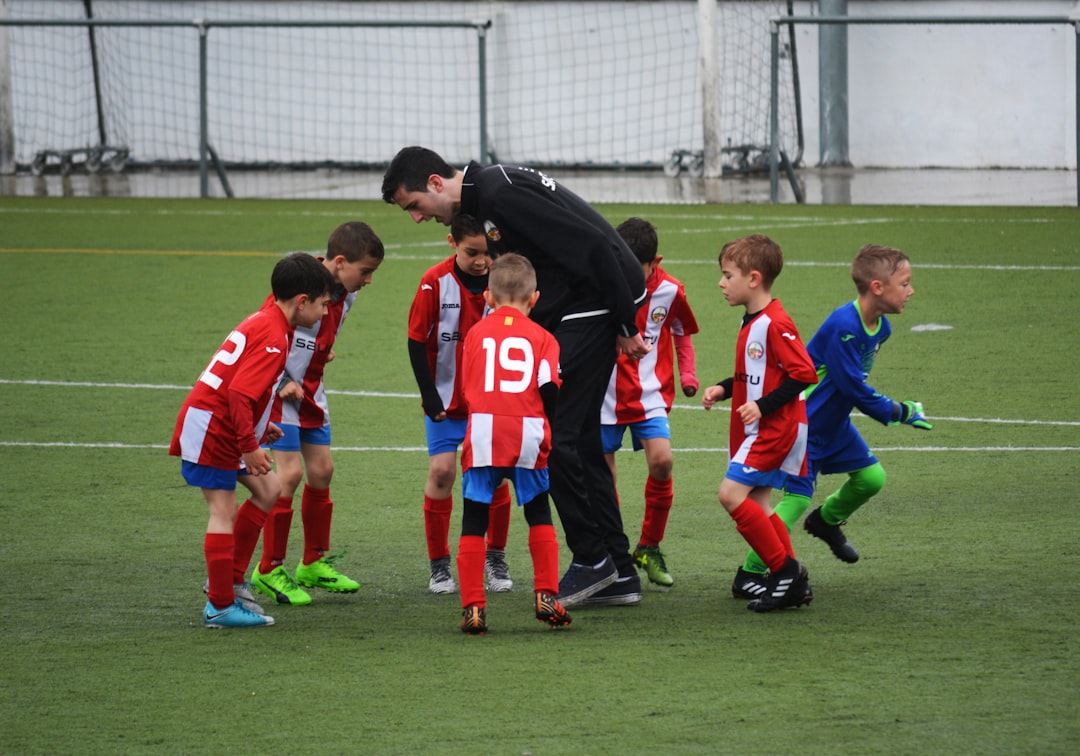
South Africa is a football nation, and the number of children who grow up wanting to play the game is enormous. The quality of coaching they receive — particularly in the formative ages between five and fourteen — has an outsized influence not just on whether they develop technically, but on whether they enjoy the game long enough to keep playing it. A child who experiences poor coaching early on often loses interest. A child who is well coached develops a love for the game that lasts a lifetime, regardless of whether they go on to play competitively.
Choosing the right soccer coach for your child involves more than finding someone who knows the game. It involves finding someone who understands child development, communicates well with young players, creates a safe environment, and teaches the game at the right pace for the age group.
Understanding SAFA coaching qualifications
The South African Football Association (SAFA) oversees coach education in South Africa through a tiered licensing system aligned with the CAF (Confederation of African Football) and UEFA standards.
SAFA Grassroots D Licence: Entry-level qualification designed for coaches working with young children (under-8s to under-12s). It covers age-appropriate games, basic skill development, and player welfare. This is the minimum formal qualification a youth coach should hold for recreational or school football.
SAFA C Licence: An intermediate qualification for coaches working with youth teams in organised competition (under-13 to under-17). It covers tactical concepts, session planning, and youth development principles.
SAFA B Licence and A Licence: More advanced qualifications for coaches working at higher levels of competition. An A Licence holder working with young children is over-qualified from a technical standpoint — but it is not a reason to avoid them.
UEFA C, B, or A Licence: Some coaches working in South Africa hold UEFA qualifications obtained through European football associations, particularly those who studied or worked abroad. These are internationally recognised and reputable.
Beyond formal SAFA qualifications, some coaches hold coaching certificates from Premier Soccer League (PSL) academies, internationally recognised youth development programmes, or sports science degrees that include coaching methodology. These are all meaningful additions to a SAFA licence.
The absence of any formal coaching qualification is a concern — particularly for a coach working with younger children where safeguarding, child communication, and age-appropriate practice structure are critical. Playing experience, even at a high level, is not a substitute for coaching education.
Age-appropriate coaching — what it should look like
One of the most reliable ways to evaluate a youth coach is to watch a session and assess whether the activities suit the age group. Applying adult football principles to young children produces frustration, early dropout, and poor technical development.
Under-8s (ages 5–7): This age group learns through play. Sessions should be structured as games with simple rules — small-sided formats (3v3, 4v4), lots of touches on the ball, minimal tactical instruction, and constant encouragement. There should be no emphasis on winning. Any coach running structured tactical drills, position assignments, or 11-a-side matches with young children is coaching outside appropriate developmental practice.
Under-10s and Under-12s (ages 8–11): Technical foundations — dribbling, passing, receiving, shooting — become more structured, but activities should still be game-centred. Small-sided games with guided questions ("what did you see when you had the ball?") develop game understanding more effectively than repetitive drills. Teams at this age should rotate positions so children experience the whole game, not just their assigned role.
Under-14s and Under-16s (ages 12–15): Tactical awareness, positional play, and physical development become relevant. Coaches working with this age group should understand the physical demands of puberty and adapt training loads accordingly. Mental and emotional development — resilience, teamwork, handling criticism — becomes an important coaching responsibility alongside technical and tactical work.
Under-18s (ages 16–17): Near-adult football in terms of intensity and tactical complexity. Coaches should be technically and tactically knowledgeable, and physically literate enough to understand training loads and injury prevention at this developmental stage.
Questions to ask before enrolling your child
What coaching qualification do you hold? Ask for the licence level and the issuing body. A genuine coach will have documentation. You can also check SAFA's registered coach database if there is any doubt.
Do you have a police clearance certificate and a child safeguarding training certificate? Any adult working professionally with children in South Africa should hold a valid police clearance (SAPS clearance certificate). Safeguarding training — understanding how to identify abuse, how to report it, and how to create a safe environment for children — is increasingly required by football clubs and governing bodies. These are non-negotiable for children's coaches.
What is your coaching philosophy? This reveals more than qualifications. A coach who talks about player enjoyment, long-term development, and building confidence alongside technical skills is aligned with best practice in youth football. A coach whose primary language is results, winning tournaments, and identifying talent has the wrong focus for developmental youth football.
How do you handle a child who is struggling, or who makes mistakes? Watch for the answer carefully. Positive, constructive responses to mistakes are foundational to good youth coaching. Any coach who responds to errors with shouting, public criticism, or shame is causing harm regardless of their technical knowledge.
What is the training schedule, and how does it fit with school commitments? Overtraining is a real risk in youth sport. Multiple sessions per week combined with school sport and matches creates burnout and injury risk, particularly in growing bodies. A responsible coach helps families navigate this balance rather than maximising training time.
What is the coach-to-player ratio in sessions? For under-12s, a ratio of one coach to eight to ten children allows reasonable individual attention. Large sessions of twenty or more children with one coach cannot provide adequate individual feedback or supervision.
What to look for when watching a session
Observing a practice session is the most reliable way to evaluate a coach. Look for the following.
Are children touching the ball frequently? A good youth session maximises ball contact time. Long queues, large groups, or passive standing time are signs of poor session design.
How does the coach respond when a child makes a mistake? The most revealing moment in any youth session is the coach's reaction to an error. Encouragement, a brief correction, and an opportunity to try again is the right response. Frustration, sighing, or public criticism is not.
Are all children included? In a mixed-ability group, a good coach finds ways to challenge the advanced players while keeping less experienced players engaged. If some children are consistently ignored or sidelined, the coach is managing a team, not developing individuals.
Is the session structured but flexible? There should be a clear session plan — warm-up, skill focus, game application, reflection — but a good coach reads the group and adapts if energy is low, if a child is upset, or if a teachable moment presents itself.
How do children behave at the end of the session? Children who leave a session energised, laughing, and asking when the next one is have had a good experience. Children who leave deflated or disengaged have not.
Private coaching vs club programmes
Club programmes offer structured team development, competitive exposure, peer learning, and the social dimension of team sport. They are appropriate for children who enjoy playing with others and who benefit from the team environment. Club football quality in South Africa varies significantly — some clubs have excellent coaching structures, others have well-meaning volunteers with no formal training. Evaluate the club's coaching approach, not just its name or league status.
Private coaching — individual or small-group sessions — accelerates technical development because feedback is constant and individualised. It is commonly used by families whose children are serious about playing at a higher level, or by children who need to build confidence before joining a group environment. Private coaching supplements club football rather than replacing it — the team environment develops qualities that individual sessions cannot.
What to budget
Club football (monthly subscription): R150–R600 per month, depending on club level and facilities. Elite development academies at PSL club structures can be significantly more.
Private individual coaching (1 hour): R300–R700 per session with a qualified coach.
Small-group private coaching (3–5 children, per child per session): R150–R350.
Holiday football camps: R800–R2,500 per week, depending on location, coach credentials, and programme quality.
Red flags
Promises of professional contracts or scholarship pathways early in a child's development. Children as young as eight are sometimes told they have "what it takes." This kind of pressure is inappropriate and harmful — the vast majority of children who play football will not go on to professional careers, and their development should be about enjoyment and skill-building, not a professional pathway.
A coach who dismisses parents' concerns. Parents have a right to ask questions about coaching methods, safeguarding practices, and how their child is being treated. A coach who dismisses these concerns or becomes defensive is a concern.
Overtraining young bodies. Growth plates in children are vulnerable to overuse injury. Reputable youth coaches work within recommended training load guidelines and do not run children for excessive distances or push physical intensity beyond what is appropriate for the age group.
No clear safeguarding policy. Any professional coach working with children should be able to tell you what their safeguarding policy is, who to contact if a concern arises, and how they manage communication with parents. If they cannot, do not leave your child in their care.
The most important thing
Ask your child. A child who enjoys their coach, looks forward to sessions, and is growing in confidence is having a good experience — regardless of technical metrics. A child who dreads sessions, comes home deflated, or does not want to go is telling you something important. Listen to it.
The best investment you can make in your child's football development is finding someone who makes them fall in love with the game. The technical skills can always be developed. The love of the game, once lost to a negative experience, is much harder to recover.