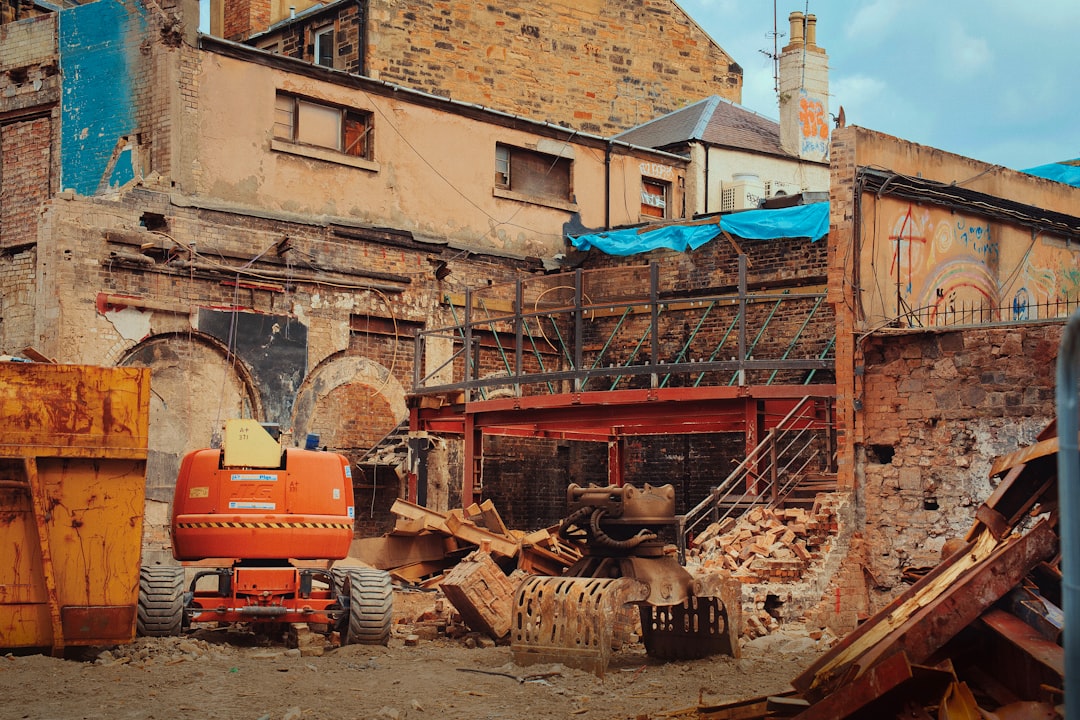
Rubble and construction waste is one of the most inconvenient byproducts of any building, renovation, or demolition project in South Africa. Getting rid of it requires a service provider who will remove it promptly, at a fair price, and — critically — dispose of it legally. Illegal dumping of building rubble is a serious environmental and legal problem in South Africa, and the party who commissioned the removal can be held liable if the waste is dumped illegally on public or private land. Choosing a legitimate, properly registered rubble removal service protects you from that liability and ensures the material is processed in a way that does not create problems for communities downstream of where the waste ends up.
This guide covers the difference between skip hire and load-and-go rubble removal services, how to get accurate pricing, what legal disposal looks like and how to verify it, the materials that affect pricing and disposal options, and the questions worth asking before any material leaves your site.
Skip Hire vs Load-and-Go — Choosing the Right Service
Skip hire involves placing a metal skip (bin) on your property for a defined rental period — typically between three and seven days — into which you load the material yourself. The company then collects the full skip and disposes of the contents. Skip hire works well when your rubble and waste is generated over several days rather than in a single push, or when you have the labour to load it yourself. The cost is typically lower than a full service because you are providing the loading labour.
Load-and-go (or bakkie-and-team) services send a vehicle with a crew who load your rubble and take it away in a single visit. This is faster, requires no on-site storage, and is appropriate when you have a specific removal day and need everything cleared at once. The cost per load is typically higher than a skip day rate, but the service is more convenient and does not require you to manage a skip permit or loading schedule.
For large-scale demolition or commercial construction projects, roll-on roll-off (RORO) containers and dedicated waste management contracts with licensed waste operators are the appropriate solution. For most residential renovation projects, a combination of skip hire for ongoing rubble management during the project and a load-and-go clear-out at the end is a practical and cost-effective approach.
Some municipalities in South Africa require permits for skips placed on public roads or pavements. Check your local municipality's requirements before booking a skip that will sit outside your property. The rubble removal company should be able to advise on this for their operating area — if they cannot, that is a gap in their local operating knowledge.
Getting Accurate Pricing
Rubble removal pricing in South Africa is quoted per load — defined by the vehicle size and the number of trips required. Common vehicle sizes range from a small 1-ton bakkie (suitable for minor clear-outs) to 3-ton, 5-ton, and 8-ton trucks for larger volumes. Most load-and-go services will give you a per-load price based on the vehicle size, and then on the day may adjust if the volume is greater or less than estimated.
For skip hire, pricing covers the skip delivery and collection fee plus the rental period. Skip sizes vary by company and region — a 3-yard skip is suitable for a bathroom renovation, while an 8-yard or larger skip is needed for a full demolition or whole-house renovation. Overloading a skip beyond its marked fill line typically results in an additional charge and can create safety problems during transport.
Get at least two quotes for any significant removal job, and make sure both quotes are on the same basis — same volume estimate, same service type. A quote that seems significantly lower than others may be estimating a smaller volume than your job will actually produce, or may not include legal disposal costs. Ask specifically whether legal disposal is included in the quoted price, because the answer affects whether you are comparing equivalent services.
Legal Disposal — What It Means and Why It Matters
Construction and demolition waste in South Africa is classified as general waste under the National Environmental Management: Waste Act (NEMWA) and must be disposed of at a licensed landfill site. Unlicensed dumping — on vacant land, roadsides, in rivers, or in any location that is not an authorised disposal site — is illegal and carries significant penalties.
The legal issue for the client is that if the person you paid to remove your rubble dumps it illegally, you may share liability for the illegal dumping, particularly if you could not demonstrate that you took reasonable steps to verify that the contractor was using a licensed disposal facility. This is not a theoretical risk — illegal dumping prosecutions in South Africa increasingly pursue the parties who generated the waste, not just the immediate dumpers.
Ask any rubble removal service which specific landfill or waste disposal site they use. A legitimate operator will name a specific licensed facility. Ask if they can provide you with a waste disposal certificate or weigh bridge ticket as proof of legal disposal after your job — this is the documentation that demonstrates due diligence on your part if the question ever arises. An operator who is vague about where your rubble goes, or who refuses to provide disposal documentation, is a significant risk.
Materials That Affect Pricing and Disposal
Not all rubble is treated the same way, and the composition of your material affects both pricing and disposal options. Clean concrete, brick, and tile rubble from demolition is the easiest and cheapest to dispose of — it can be crushed and recycled as aggregate for road base and fill material at specialised recycling facilities, which are generally lower cost than landfill tipping fees.
Mixed rubble that contains timber, plastic, roofing materials, and other non-inert waste is more expensive to dispose of because it cannot go to a rubble recycling facility and must be handled at a general waste landfill. If you can separate clean masonry rubble from other waste streams during demolition or renovation, you can reduce your disposal cost.
Hazardous materials — asbestos roofing sheets, asbestos cement pipes, and similar — are a completely separate category that requires a licensed hazardous waste contractor. Standard rubble removal services do not handle asbestos, and attempting to dispose of it through general rubble removal is both illegal and a serious health risk to everyone involved. If your renovation involves asbestos materials, get a specialist hazardous waste contractor for that component separately.
Questions to Ask Before You Book
Which licensed disposal facility do you use, and can you provide a waste disposal certificate or weigh bridge ticket after the job? This is the most important question — it is the one that determines whether your disposal is legally defensible.
What vehicle size will you send, and how many loads do you estimate? Getting a volume estimate before the day prevents the scenario where the quoted price was for one load but the job requires three.
Do you require a permit for the skip, or do you handle that? Know who is responsible for the permit if a skip will be on a public road or pavement.
Is your price inclusive of legal landfill fees? An all-inclusive price that covers transport and disposal is simpler and more transparent than a base price with disposal added as a variable at the end.
Red Flags to Watch For
Cash-only operators who cannot tell you where the rubble goes. Cash-only transactions with no documentation and no specific disposal site named are the profile of an operator who is most likely to dump illegally. The price will be low because they are not paying landfill fees.
Prices dramatically below market rate. Legal disposal costs money — landfill tipping fees, transport, fuel, and labour. A rubble removal price that seems impossibly low relative to competitors is either based on a smaller volume estimate than the job requires, or the disposal costs are not being incurred because the material is being dumped illegally.
No waste disposal documentation on request. A legitimate, licensed rubble removal operator using authorised disposal facilities will have weigh bridge tickets and can provide these on request. An operator who cannot or will not is not using licensed disposal.
Quick Checklist Before You Book
- Decide between skip hire and load-and-go based on your timeline and whether you are providing loading labour
- Get at least two quotes on the same basis — volume estimate, service type, inclusive of disposal
- Ask specifically which licensed disposal facility is used and request a disposal certificate after the job
- Separate clean masonry rubble from mixed waste if possible — reduces disposal cost
- Check whether a skip permit is required for your municipality if the skip will be on a public road
- Confirm whether asbestos or other hazardous materials are present — these require a specialist contractor
- Be cautious of dramatically below-market quotes — legal disposal costs money, and illegal dumping creates your liability
- Check reviews from recent customers about whether the job was completed as quoted and whether documentation was provided
Rubble removal is one of those services most people organise under time pressure at the end of a project, without much thought about the legal implications of where the material ends up. Taking a few minutes to verify that the operator you choose uses licensed disposal is a simple step that protects you from liability and from contributing to an environmental problem that affects communities across South Africa. KiesSlim makes it easy to find and compare rubble removal services in your area based on real customer experiences.