When it comes to choosing a driveway surface in South Africa, three options dominate the residential market: clay or concrete brick paving, tarmac (asphalt), and exposed aggregate or plain concrete. Each has genuine advantages and real limitations, and the best choice depends on your budget, your climate zone, how much maintenance you are prepared to do, and what the driveway looks like matters to you. There is no universally correct answer — but there are wrong answers for specific contexts. A tarmac driveway that works well in Johannesburg may be a poor choice in the Western Cape winter. Brick paving that suits a large suburban driveway becomes expensive and impractical on a steep slope. Understanding the trade-offs before you spend makes the decision clear.
This guide compares tarmac, brick paving, and concrete driveways on cost, durability, maintenance, appearance, and suitability for South African conditions — so you can choose the right surface for your specific situation.
Brick Paving: The South African Standard
Clay or concrete block pavers are the most widely used driveway surface in suburban South Africa. They offer a combination of visual appeal, repairability, and durability that makes them the default choice for most residential driveways.
Cost: R350–R650 per square metre installed for clay pavers; R280–R500/m² for concrete block pavers. Higher than tarmac for medium to large driveways, lower than premium concrete finishes.
Durability: Clay pavers have a lifespan of 30–50+ years — longer than the house in many cases. Concrete block pavers last 20–35 years before surface erosion becomes significant. Both surfaces can tolerate vehicle loads, oil spills (individual bricks can be replaced), and the temperature extremes of South Africa's inland climates.
Repairability: The standout advantage of brick paving. Individual bricks that are cracked, stained, or sunken can be lifted and replaced or relevelled. A sinkhole or tree root problem can be repaired without resurfacing the entire driveway. No other surface is as easily spot-repaired.
Maintenance: Periodic resealing of joints with kiln-dried sand, occasional weeding of joint gaps in older installations, and pressure washing for appearance maintenance. Ridge repointing is not needed (unlike mortar-bedded natural stone). Annual maintenance cost: essentially zero beyond occasional cleaning.
Drainage: Individual paver joints allow some water infiltration — brick paving generally drains better than monolithic concrete or tarmac surfaces, reducing runoff concentration. Permeable pavers (designed specifically for high-infiltration applications) take this further but cost more.
Best for: Most standard South African residential driveways. Aesthetically versatile. Best value over a 20+ year lifespan despite higher upfront cost than tarmac.
Tarmac (Asphalt): The Speed and Scale Option
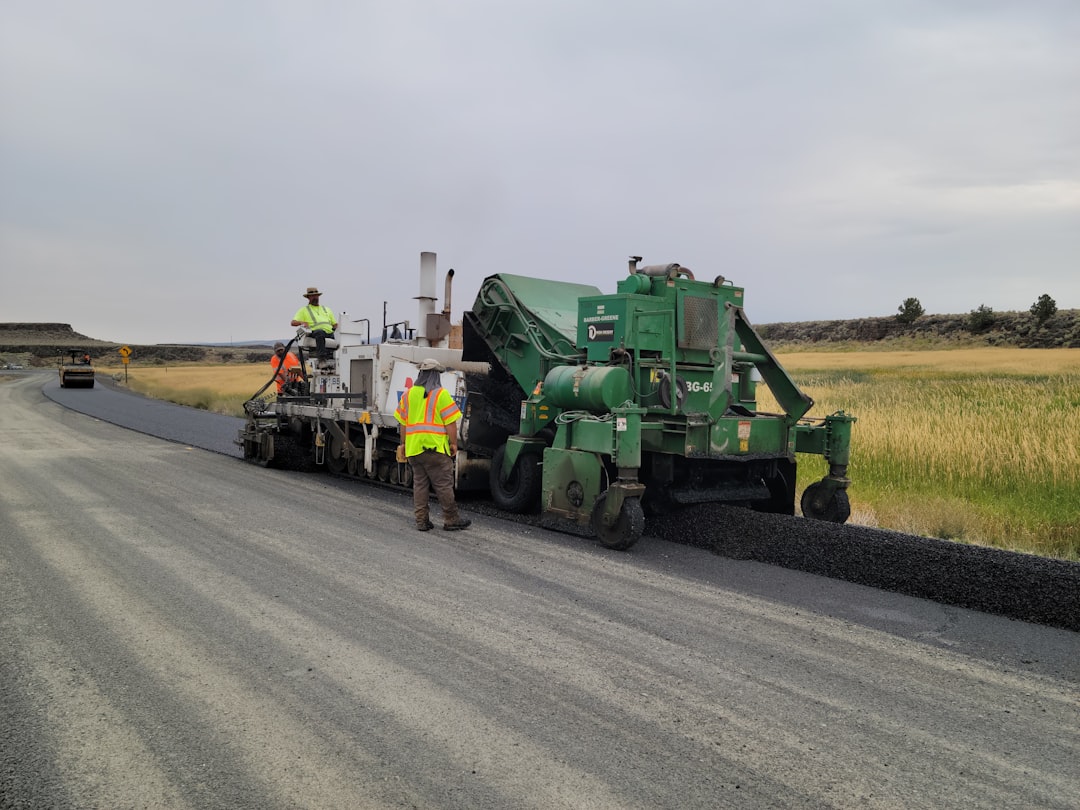
Tarmac is less commonly used in residential South Africa than in European markets but has genuine advantages for specific applications — particularly large driveways or estate roads where cost per square metre matters and aesthetic requirements are modest.
Cost: R250–R450 per square metre installed. For large driveways (100m²+), tarmac is often 25–40% cheaper than equivalent brick paving.
Durability: 10–20 years with proper maintenance. Shorter lifespan than brick paving, but the replacement or resurfacing cost is also lower. Surface degradation in South Africa is accelerated by UV radiation (the binder oxidises and the surface becomes brittle) and by temperature cycling (expansion and contraction in Highveld summer/winter temperatures causes surface cracking over time).
Maintenance: Sealing every 3–5 years is essential to protect the binder from UV degradation. Sealant application costs R40–R80/m² and extends surface life significantly. Crack repair is possible but visible — cracks that are sealed are patched with a different texture and colour. Oil stains are permanent on untreated tarmac.
Appearance: Functional, utilitarian. A freshly laid tarmac driveway looks clean in a minimalist way. After a few years without sealing, it turns grey and patchy. Not suitable if the driveway is a significant aesthetic feature of the property.
Climate considerations: Tarmac softens in extreme heat — temperatures above 40°C (common in the Northern Cape and Limpopo lowveld in summer) can cause the surface to deform under concentrated loads (vehicle tyres, heavy SUVs). Not recommended for very hot climates without a high-temperature asphalt specification.
Best for: Large driveways where cost is the primary driver, estates and complexes, secondary or service driveways where appearance is not a priority.
Concrete: The Low-Maintenance Permanent Option
Concrete driveways in South Africa range from plain grey broom-finished slabs to exposed aggregate, stamped, or coloured concrete with a wide range of aesthetic possibilities. Concrete is the most permanent option — properly constructed concrete lasts 30–50 years with minimal maintenance.
Cost: Plain concrete (broom finish): R300–R500/m² installed. Exposed aggregate: R350–R600/m². Stamped or decorative concrete: R400–R700/m². These figures include a properly compacted base — concrete placed on an inadequate base cracks, negating its durability advantage entirely.
Durability: Concrete does not degrade from UV exposure the way tarmac does. It does not move the way brick paving can in problem soil conditions. Properly constructed and cured, concrete maintains its structural integrity for decades. The main failure mode is cracking — from thermal expansion, from tree root growth, from ground movement, or from an inadequate base.
Cracking: All concrete cracks. Control joints (planned weak points cut into the slab) control where it cracks — preventing random structural cracking. If a contractor proposes concrete without control joints, that is a significant concern. Once random cracking begins in concrete, it cannot be reversed — only patched cosmetically or replaced.
Maintenance: Essentially zero maintenance beyond periodic cleaning. Sealing is optional but improves stain resistance. This is concrete's standout advantage — it requires almost no ongoing attention.
Climate considerations: South Africa's Highveld climate with hot summers and cold winters (frost in some areas) creates significant thermal cycling stress on concrete. Properly specified concrete (correct mix, correct thickness, correct joint spacing) handles this well. Underpowered concrete mixes fail.
Repairability: Poor. Cracked or damaged sections are difficult to repair invisibly. A replaced section will not match the existing concrete in colour or texture. This is concrete's main disadvantage compared to brick paving.
Best for: Homeowners who prioritise low maintenance over repairability, decorative entertainment areas where appearance matters but the area is stable and well-prepared, and properties where aesthetic flexibility is valued (exposed aggregate and stamped concrete offer design options that tarmac and plain paving cannot).
Direct Comparison Summary
A quick-reference comparison across the key decision factors:
- Lowest upfront cost: Tarmac (for large areas), concrete (for mid-range)
- Best long-term value: Clay brick paving (lifespan + repairability)
- Easiest maintenance: Concrete (essentially zero once laid)
- Best repairability: Brick paving (individual brick replacement)
- Best aesthetics / options: Brick paving or decorative concrete
- Worst in extreme heat: Tarmac (softening risk above 40°C)
- Worst cracking risk: Concrete (when base is inadequate)
- Best drainage: Brick paving (joint infiltration)
Quick Checklist Before You Choose a Surface
- Measure the driveway area accurately — cost differences between materials multiply with size
- Ask about base preparation for whichever material you choose — the base determines performance more than the surface
- For concrete: confirm control joints will be cut and where
- For tarmac: ask about the asphalt specification and whether sealing is included or follow-on cost
- For brick paving: confirm the paver thickness (60mm pedestrian, 80mm vehicle), manufacturer, and joint sand specification
- Get at least three quotes on your chosen material — contractor quality varies significantly
- Ask each contractor to show you a comparable completed job you can inspect
The best driveway surface is the one that performs well for your specific application over the long term — not the cheapest one today. Getting the base preparation right matters more than the surface material choice. Reviews from homeowners on KiesSlim for driveway and paving contractors in your area will show you whose work holds up through several seasons and whose looks good on installation day and disappoints within two years.