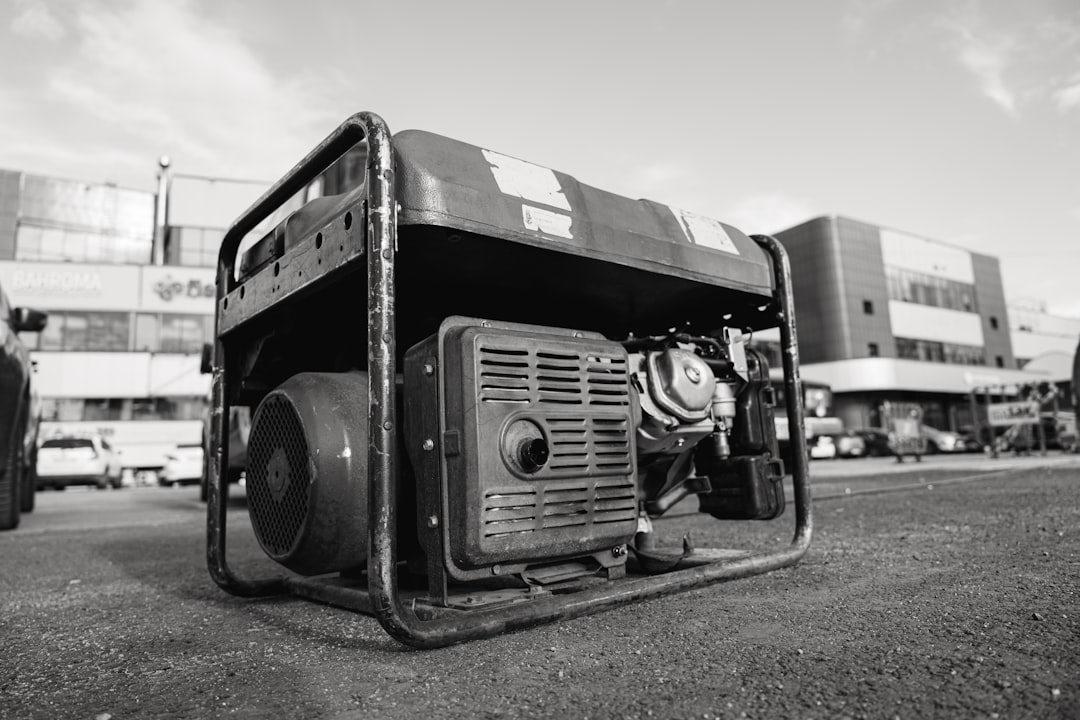
Load shedding in South Africa has driven generator sales to levels no one would have anticipated a decade ago. The result is a market flooded with options — from small petrol units you carry to the garage door to large diesel standby generators wired permanently into your home's distribution board. The price range spans from R3,000 to R350,000 depending on capacity, fuel type, and the degree of integration with your home's electrical system. Most homeowners are not engineers and struggle to match their actual power needs to the right generator specification, which leads either to underpowered systems that cannot run the critical loads, or oversized, overpriced systems that were never necessary.
This guide breaks down what a generator installation realistically costs in South Africa in 2026, how to size the system correctly, and what separates a proper installation from a dangerous one.
Portable Petrol Generators: Entry-Level Load Shedding Cover
A portable petrol generator is the simplest and cheapest load shedding solution. You fill it with petrol, start it manually, plug in an extension cord or a transfer switch, and you have power for the duration of load shedding.
Capacity ranges relevant for South African residential use:
1–2 kVA (around 1–1.6 kW output): Runs LED lights, phone chargers, a small TV, and basic appliances. Cannot run a fridge or microwave. Supply cost: R3,000–R6,000. Suitable only as a basic lighting and device-charging solution.
3–5 kVA (around 2.4–4 kW output): Runs a fridge, lights, TV, basic appliances, and charges devices simultaneously. Cannot run an electric stove or a geyser. Supply cost: R6,000–R14,000 for a quality unit (Honda, Kipor, Yamaha, or South African assembled brands like Kipor and Kama). Avoid unknown Chinese brands at below-market prices — load management and AVR (automatic voltage regulation) quality varies enormously and cheap units damage sensitive electronics.
7–10 kVA (around 5.6–8 kW output): Can run most household loads except an electric stove simultaneously. Useful for households with a gas hob (which eliminates the cooking load) but who want to keep the fridge, freezer, TV, and basic appliances running. Supply cost: R12,000–R25,000.
Installation cost for a portable generator: A portable unit with a properly wired manual changeover switch (which isolates the generator from the Eskom grid before connection — legally required for safety) costs R2,500–R5,000 for the changeover switch and professional installation by a licensed electrician. Without a proper changeover switch, your generator can back-feed the grid during load shedding, creating a lethal hazard for Eskom workers restoring power. An electrical COC is required for the changeover switch installation.
Diesel Generators: For Larger Loads and Longer Run Times
Diesel generators are more fuel-efficient than petrol units, last longer between services, and are better suited to continuous or extended operation. They are the standard solution for larger homes, estates, and commercial applications.
Residential diesel generator capacity and supply costs:
- 8–10 kVA: R18,000–R35,000
- 15–20 kVA: R35,000–R65,000
- 30–40 kVA: R60,000–R120,000
- 50+ kVA: R100,000–R250,000+
Major suppliers in South Africa: FG Wilson, Cummins, Perkins, Kohler, and numerous South African distributors assembling Chinese-sourced diesel engines with local switchgear. Brand matters for support, warranty, and parts availability — a no-name diesel generator at half the price of a Cummins equivalent is cheap until the injector pump fails and no local parts are available.
Installation cost for a diesel standby generator: R8,000–R25,000 depending on the installation complexity (cable run distance, concrete pad, ventilation, fuel tank setup, and ATS — see below). The installation requires a licensed electrician and an electrical COC on completion.
Automatic Transfer Switch (ATS): The Key Upgrade
A manual changeover switch requires you to go outside, start the generator, and manually switch over. An Automatic Transfer Switch (ATS) detects a mains power failure, starts the generator automatically, and transfers the load — all without any action from you. When Eskom power is restored, the ATS transfers back to mains and stops the generator.
ATS supply and installation cost: R8,000–R20,000 depending on capacity (the ATS must match the generator output) and the complexity of the integration with the distribution board. A quality ATS from a reputable brand (ComAp, Deep Sea Electronics, Comap) is R5,000–R12,000 supply-only. Installation adds R3,000–R8,000 in electrician labour.
For any generator that will be used regularly — which in South Africa means almost all of them — the ATS upgrade is strongly recommended. A manual changeover involves running out to the garage in the dark during load shedding and is frequently skipped, meaning the generator does not get used and perishables are lost.
Inverter Generators: The Quiet, Clean Power Alternative
Inverter generators produce a cleaner sine wave output than conventional generators, making them safe for sensitive electronics. They are also significantly quieter, which matters in suburban South Africa where generator noise is a real neighbourly friction point.
Inverter generator supply costs:
- 2–3 kVA: R8,000–R18,000 (Honda EU series, Yamaha EF series are the gold standard)
- 5–6 kVA: R18,000–R35,000
Inverter generators are more expensive per kVA than conventional generators but are cleaner, quieter, and more fuel-efficient at part load. For home offices with sensitive equipment and suburban properties where noise matters, the premium is often justified.
What the Total Installed Cost Looks Like
Putting the full picture together for common residential scenarios:
Basic load shedding cover (portable petrol generator + manual changeover): R10,000–R22,000 all in for a quality 5 kVA unit with a proper changeover switch and electrical COC.
Mid-range automatic solution (10 kVA diesel + ATS + concrete pad): R55,000–R85,000 all in.
Comprehensive standby power (20 kVA diesel + ATS + enclosed weatherproof housing + 200L diesel tank): R100,000–R180,000 all in. This level of solution is typically for large homes or households where power reliability is critical.
Safety and Legal Requirements
Any generator connected to the home's electrical system must be installed by a licensed electrician and must have an electrical COC issued on completion. A generator connected without a proper changeover switch or ATS creates a back-feed hazard and is a violation of SANS 10142 (the South African wiring code). This is not a technicality — back-feed from home generators has killed Eskom workers during restoration work in South Africa.
Fuel storage: petrol stored in jerry cans in an enclosed garage is a significant fire hazard. Diesel is much less volatile and safer to store. Any fixed fuel tank for a diesel generator must comply with local fire regulations and in some municipalities requires a permit for tanks above a certain capacity.
Quick Checklist Before You Purchase
- Calculate your actual load requirement before buying — list the appliances you need to run and total their wattages
- Size the generator at 70–80% of rated capacity for regular operation — do not run a generator at 100% continuous load
- Use a licensed electrician for all installation work — do not connect a generator to your DB board yourself
- Insist on an ATS if the generator will be used regularly
- Confirm an electrical COC will be issued on completion
- Get at least two quotes on the installation — labour costs vary significantly between electricians
- Factor in ongoing maintenance costs: oil changes, filter replacements, and annual services for diesel units
- Check that the generator brand has local parts and service support before purchasing
A generator is a meaningful investment that should last 10–20 years with proper maintenance. Getting both the sizing and the installation right determines whether it actually does the job reliably when you need it. Checking reviews for electricians and generator installers on KiesSlim before you commit gives you the confidence that the person wiring the installation has a track record of doing it correctly and safely.