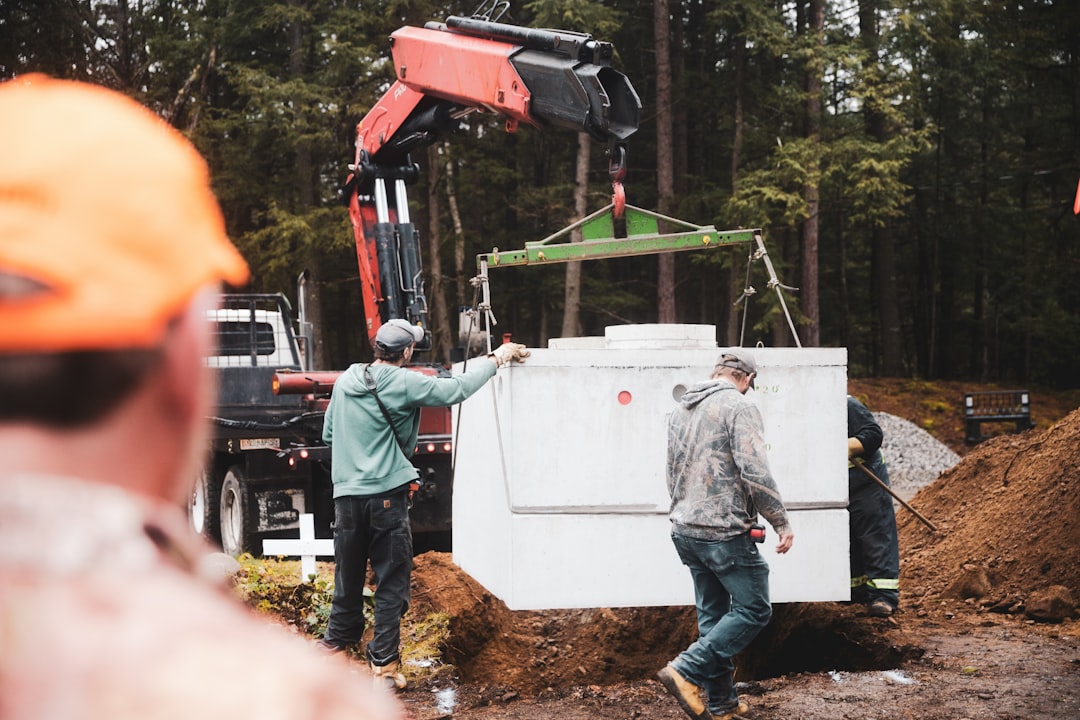
When a Septic Tank Is the Right Solution
A septic tank system is the standard wastewater solution for properties not connected to a municipal sewage network. This covers a significant portion of South African properties — rural homes, smallholdings, farms, peri-urban developments on the fringe of expanding towns, and many sectional title complexes and estates that handle their own effluent.
A properly designed and installed septic system treats household wastewater on-site through natural bacterial processes, discharging the treated effluent into a drain field (also called a French drain or soakaway) where it disperses safely into the soil. Done correctly, a septic system is low-maintenance, long-lasting, and environmentally sound. Done incorrectly — undersized, badly sited, or poorly constructed — it creates ongoing problems including sewage odours, surface ponding, and groundwater contamination.
Types of Septic Systems Available in South Africa
Several system types are available, at varying price points:
- Conventional concrete septic tank with French drain — the most common and affordable option. A concrete tank (precast or cast-in-situ) receives raw sewage, allows solids to settle, and passes the liquid effluent to a drain field. Suitable for most residential applications with adequate soil permeability.
- Fiberglass or polyethylene (plastic) tanks — factory-manufactured, lighter than concrete, and easier to transport to remote sites. Increasingly popular. Comparable performance to concrete when correctly sized.
- Biodigester / anaerobic baffled reactor systems — more advanced biological treatment systems that produce cleaner effluent. More expensive upfront but require less maintenance and produce less sludge. Often required in environmentally sensitive areas or where soil permeability is poor.
- Package treatment plants — electromechanical systems that treat effluent to a standard suitable for irrigation or discharge. Required in high-density developments or where effluent must meet strict standards. Significantly more expensive and require regular maintenance contracts.
Sizing — the Most Important Decision
Undersizing a septic tank is the most common installation mistake. A tank that fills faster than it can process waste will back up, overflow, or require pumping out far too frequently.
South African guidelines typically size septic tanks based on the number of bedrooms (as a proxy for occupants) and the daily water usage:
- 2-bedroom home (up to 4 people) — minimum 2,500 litres
- 3-bedroom home (up to 6 people) — minimum 3,500 litres
- 4-bedroom home (up to 8 people) — minimum 4,500 to 5,000 litres
- Larger properties or those with high water usage — 6,000 litres and above
Always size slightly larger than the minimum. The incremental cost between a 3,500-litre and a 4,500-litre tank is small relative to the cost of problems caused by undersizing.
What Does Installation Cost in 2026?
Total installed cost depends on the tank type, size, site accessibility, soil conditions, and the extent of the drain field required. Typical 2026 pricing ranges:
- Concrete or plastic tank (2,500–3,500 litre), standard installation — R15,000 to R28,000. This includes the tank, excavation, inlet and outlet connections, and a standard French drain.
- Larger tank (4,500–6,000 litre) — R25,000 to R45,000 installed
- Biodigester system — R30,000 to R70,000 depending on size and complexity
- Package treatment plant — R80,000 to R250,000 for residential applications; significantly more for communal or commercial installations
Factors that increase cost: rocky ground requiring blasting or heavy excavation (add R5,000 to R20,000), difficult site access for machinery, long distances between the house and the soakaway area, and poor soil permeability requiring a larger or alternative drain field design.
Municipal Requirements and Approvals
Septic tank installations typically require approval from your local municipality or district council. Most municipalities require a site plan showing the tank location, its distance from boundaries, buildings, boreholes, and water courses, and the design of the drain field.
Key regulatory distances (these vary by municipality — always confirm locally):
- Minimum 3 metres from any building
- Minimum 1.5 metres from any boundary
- Minimum 30 metres from any borehole or water source
- Drain field must be downslope of any water supply
A plumber or engineer who submits plans for you and manages the approval process is worth the additional cost — non-compliant installations can require expensive rectification and may affect your ability to sell the property.
Maintenance Expectations
A properly sized and installed concrete or plastic tank requires pumping out (desludging) every three to five years for a typical household. The cost of a pump-out is R1,500 to R3,500 depending on tank size and location.
Signs a pump-out is overdue: slow draining throughout the house, gurgling sounds in drains, sewage odours near the tank or drain field, or wet patches appearing in the drain field area.
Do not flush wet wipes, nappies, sanitary products, or excessive quantities of fat down the system — these disrupt the bacterial process that makes the system function and increase desludging frequency significantly.
Choosing a Plumber or Installer
Use a registered plumber (PIRB-registered) and ask specifically whether they have experience with septic system design and installation. Request a written quote that specifies the tank size and type, excavation scope, drain field design, and whether municipal approval is included. Get at least two quotes and compare the specifications — not just the price.